
Hey there, fellow stargazers and innovators! Have you ever imagined a future where humanity isn’t confined to one planet, but thriving among the stars?
It might sound like science fiction, but the incredible reality is that global cooperation in space development is making this vision a tangible goal.
From launching groundbreaking telescopes that redefine our universe to establishing lunar bases and eyeing Mars, these ambitious projects are increasingly powered by international partnerships.
What I’ve personally observed is that when nations unite their expertise and resources, the sky truly isn’t the limit—it’s just the beginning of a shared journey.
Ready to discover how these powerful alliances are shaping our cosmic destiny?
Unlocking the Cosmos Together: The Power of Pooled Minds
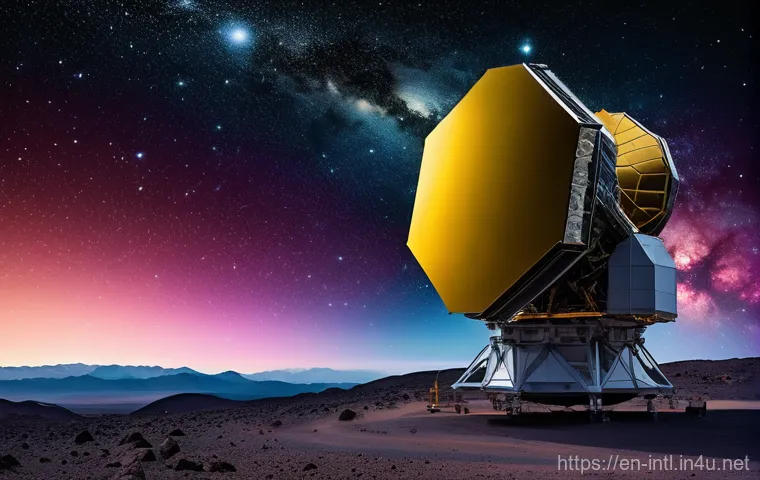
You know, when I first started truly diving into the world of space exploration, I was immediately struck by the sheer scale of it all. It’s not just about rocket science or engineering; it’s about a global tapestry of human ingenuity. What I’ve seen firsthand, and what genuinely excites me, is how nations are increasingly coming together, not just as partners, but as a unified force, to push the boundaries of what’s possible beyond our atmosphere. It’s like watching a giant, intricate puzzle being assembled, piece by piece, by the best minds from every corner of the planet. We’re talking about shared knowledge, shared resources, and honestly, shared dreams. This isn’t just about one country achieving something extraordinary; it’s about humanity, as a collective, reaching for the stars. Every time a new mission is announced with multiple international players, I get this incredible rush of optimism, a feeling that our differences fade when we look up at the same night sky. It’s a powerful testament to what we can accomplish when we focus on common goals, and it’s truly inspiring to witness this evolution.
Beyond Borders: Why Collaboration is Key to Cosmic Discovery
Let’s be real, space is vast, and its challenges are immense. No single nation, no matter how advanced, can tackle every aspect of space exploration alone without immense strain on resources and expertise. This is where international collaboration shines brightest. Think about it: one country might have unparalleled expertise in propulsion, another in robotics, and yet another in life support systems. When these unique strengths are combined, the resulting synergy is far greater than the sum of its parts. I’ve personally followed stories of engineers from different cultural backgrounds working side-by-side, overcoming language barriers with the universal language of science, all striving towards a common objective. This pooling of intellectual capital doesn’t just make missions more feasible; it makes them more robust, more innovative, and ultimately, more successful. It’s a pragmatic approach to a monumental endeavor, and honestly, it’s beautiful to watch this level of global teamwork in action, proving that when we set our sights high, we can accomplish anything together. It’s a practical demonstration of unity that resonates deeply.
My Own ‘Aha!’ Moment: Seeing the Stars Through Shared Lenses
I distinctly remember a moment a few years back when I was reading about a specific international project, I believe it was related to deep-space communication, and it hit me. The sheer audacity of these ventures, the incredibly complex systems, the years of planning – it all seemed impossible for any single entity. But then I saw the list of participating countries and organizations, and it clicked. It wasn’t just about one brilliant scientist or one advanced lab; it was about hundreds, thousands of people, across dozens of nations, all contributing their piece to a massive, intricate jigsaw puzzle. It felt like a truly global effort, a symphony of human effort. My perspective shifted from seeing space exploration as a series of national achievements to recognizing it as humanity’s shared legacy. That’s when I truly understood the profound impact of collaboration, not just on the missions themselves, but on fostering a sense of shared human destiny. It really resonated with me, making me feel connected to something much larger than myself, and that’s a feeling I think everyone should experience.
From Earth’s Orbit to Distant Galaxies: Joint Missions Redefining Our Universe
When we talk about global cooperation, the first thing that often comes to mind, at least for me, is the incredible International Space Station, or ISS. This isn’t just a laboratory orbiting Earth; it’s a shining beacon of what humanity can achieve when it chooses collaboration over competition. For over two decades, astronauts and cosmonauts from various nations have lived and worked together, conducting groundbreaking scientific research that benefits us all back on Earth. Think about the sheer logistical marvel of keeping such a complex facility operational, with contributions from NASA, Roscosmos, ESA, JAXA, and CSA. It’s an ongoing testament to enduring partnership, where daily life involves overcoming cultural differences and celebrating shared successes. I’ve always found it profoundly inspiring to imagine those individuals, far above us, united by a common purpose, representing the very best of human spirit and cooperation. Their work up there isn’t just about space; it’s about demonstrating how we can build a better future together, one experiment, one repair, one shared meal at a time.
The ISS: A Testament to Enduring International Harmony
The International Space Station truly is a marvel, a flying symbol of diplomatic success and technological prowess forged through a quarter-century of partnership. It started as a vision, a handshake agreement between former rivals, and has evolved into the most complex and expensive scientific endeavor ever undertaken. I often ponder the daily challenges faced by the crews up there – not just the technical ones, but the human ones. Imagine living in close quarters with people from different continents, speaking different primary languages, all while performing high-stakes scientific work in a dangerous environment. Yet, they do it, seamlessly. The modules are built by different countries, the resupply missions are launched by different agencies, and the scientific experiments come from universities and research institutions worldwide. This ongoing synergy is precisely why the ISS has been so successful, enabling long-duration human spaceflight research and critical Earth observation. It’s a living, breathing example of how trust and shared goals can overcome any barrier, proving that our collective strength is indeed our greatest asset in the vastness of space. It’s a project that makes me incredibly proud to be human.
Peering Deeper: How Global Telescopes Expand Our Vision
Beyond low Earth orbit, international partnerships are equally crucial in pushing the boundaries of astronomical discovery. Take the James Webb Space Telescope (JWST), for instance. This incredible instrument, a collaboration between NASA, ESA, and CSA, has absolutely revolutionized our understanding of the early universe. I remember vividly when the first full-color images were released; it felt like a collective gasp of wonder echoed across the globe. We wouldn’t have those breathtaking images, those insights into exoplanets and distant galaxies, without the combined scientific and engineering genius of these agencies. Similarly, ground-based observatories like the Atacama Large Millimeter/submillimeter Array (ALMA) in Chile, a partnership of over 20 countries, allows us to study the cold universe and the formation of stars and planets. These projects require massive investments, intricate design, and specialized expertise that few, if any, single nations could provide alone. It’s a powerful reminder that our quest to understand the universe is inherently a shared one, a journey we embark on together, pushing the very limits of human perception. Every new discovery feels like a shared victory for all of humanity.
Crafting Our Future Among the Stars: The Lunar Gateway and Martian Dreams
The spirit of collaboration isn’t just about past successes; it’s profoundly shaping our future endeavors, especially as we set our sights on returning to the Moon and eventually reaching Mars. The upcoming Lunar Gateway project is a prime example. This isn’t just an American initiative; it’s a critical component of NASA’s Artemis program, involving key contributions from ESA, JAXA, and CSA. Imagine a space station orbiting the Moon, a vital staging post for missions to the lunar surface and a stepping stone for deeper space exploration. It’s an ambitious undertaking, requiring advanced propulsion, habitation modules, and robotics, all meticulously designed and built through international teamwork. I find it absolutely fascinating how each partner brings a unique piece of the puzzle, whether it’s specific hardware, operational expertise, or scientific payloads. This distributed effort not only spreads the cost and risk but also ensures a broader base of talent and innovation. It feels less like a competition and more like a grand relay race, where each nation passes the baton, propelling us closer to our shared destiny among the stars. It’s this kind of forward-thinking partnership that truly makes me excited for what’s to come.
Laying Foundations: The Moon as Humanity’s Next Frontier
Our return to the Moon isn’t just about planting flags; it’s about establishing a sustainable human presence, a true off-world outpost that will serve as a proving ground for even more ambitious deep-space missions. The Lunar Gateway, with its international flavor, is central to this vision. It’s designed to be a reusable command and service module, providing a habitat for astronauts, a science laboratory, and a docking port for both lunar landers and spacecraft heading further into the solar system. I’ve been following the developments closely, and the contributions from ESA’s European Service Module for Orion, JAXA’s habitation and logistics modules, and CSA’s robotic arm for the Gateway are absolutely essential. This isn’t a solo mission; it’s a global endeavor to learn how to live and work in deep space, pushing the boundaries of technology and human endurance. The lessons we learn from building and operating the Gateway, with all its international components, will be invaluable as we venture further. It’s a crucial step that demonstrates our collective commitment to not just visiting, but truly settling in the cosmos. It’s a monumental undertaking that I believe will define generations to come.
Martian Visions: Preparing for the Ultimate Leap
And then there’s Mars – the ultimate prize, the next major destination for human exploration. While a human mission to Mars is still some years away, the groundwork is being laid through a myriad of international robotic missions and scientific collaborations. Rovers like Perseverance, with its international science payloads, are gathering vital data about the Martian environment, preparing us for human presence. Future Mars missions will undoubtedly involve a complex web of international partnerships, pooling resources for everything from propulsion systems and advanced life support to radiation shielding and in-situ resource utilization. I often ponder the sheer engineering and human psychology challenges of a journey to Mars, a multi-year endeavor. It will require the best of humanity working together – sharing data, refining designs, and overcoming unforeseen obstacles. When I think about the long-term vision, it’s not just about getting humans to Mars; it’s about establishing a permanent human outpost there. That vision absolutely demands global unity, ensuring that such a monumental achievement is truly a win for all of humanity, a testament to our shared ambition and collaborative spirit. It’s a journey I genuinely hope to see unfold in my lifetime.
More Than Rockets and Robots: Earthly Dividends from Space Synergy
It’s easy to get caught up in the awe-inspiring rockets and distant planets, but what I find truly remarkable, and something I believe doesn’t get enough attention, are the incredible benefits that international space cooperation brings right back here to Earth. It’s not just about scientific discovery; it’s about tangible improvements to our daily lives, often in ways we don’t even realize. Think about the countless technologies that have spun off from space research – from advanced medical imaging to water purification systems, improved weather forecasting, and even the materials used in your everyday gadgets. These innovations are often accelerated and made more robust precisely because they emerge from internationally diverse teams tackling complex problems. When different perspectives and approaches are brought to bear on a challenge, the solutions tend to be more comprehensive and applicable across a wider range of contexts. It’s a fantastic ripple effect, proving that investing in space isn’t just about what’s “out there,” but about profoundly enriching life “down here.” This aspect of space exploration is something I personally find incredibly inspiring, showcasing how innovation transcends the stars.
Spin-off Technologies: Innovation Beyond Our Wildest Dreams
The history of space exploration is littered with examples of technologies developed for the extreme conditions of space that have found unexpected and profound applications on Earth. And when these technologies are developed through international efforts, their global reach and impact are amplified. Consider the advancements in materials science, miniaturization, and remote sensing that are direct descendants of satellite programs and deep-space missions. These aren’t just fascinating technical achievements; they’ve led to everything from more efficient solar panels on our homes to GPS systems that guide our cars and phones, and even advanced prosthetics for those who need them. I’ve often thought about how a challenge like keeping astronauts alive in space pushes engineers to innovate in ways they might not otherwise, leading to breakthroughs that ripple through various industries. This constant drive for efficiency, reliability, and precision, inherent in space engineering, naturally breeds innovation that universally improves our quality of life. It’s a testament to the powerful, often unseen, return on investment that space exploration provides, directly impacting our daily experiences.
Fostering Diplomacy: Bridging Divides Through Shared Ambition

Beyond the technological benefits, I believe one of the most profound, yet often underestimated, outcomes of international space cooperation is its role in fostering diplomacy and understanding between nations. When scientists and engineers from countries with complex political histories work together towards a common, peaceful goal like exploring the cosmos, it builds bridges of trust and mutual respect that can extend far beyond the laboratory or mission control. The International Space Station, as I mentioned before, stands as a prime example. Astronauts from nations that might be at odds politically are living, working, and even sharing meals together in orbit. This kind of sustained collaboration creates personal bonds and shared experiences that can soften diplomatic tensions and promote a more unified global outlook. I’ve always felt that when humanity looks up at the stars together, our terrestrial differences often seem smaller. Space exploration, in this sense, acts as a powerful catalyst for international cooperation, proving that shared ambition can indeed transcend cultural and political divides, leading to a more peaceful and interconnected world. It’s a powerful message that resonates deeply with me.
The Road Less Traveled: Overcoming Hurdles in Cosmic Collaboration
Now, while it’s wonderful to focus on the triumphs of international space cooperation, it would be disingenuous to suggest that it’s all smooth sailing. Just like any complex human endeavor, especially one involving multiple sovereign nations, there are significant hurdles to overcome. From navigating disparate legal frameworks and funding mechanisms to coordinating engineering standards and managing cultural differences, these projects are incredibly challenging. I’ve personally been fascinated by the stories of project managers and engineers who’ve spent years negotiating agreements, harmonizing technical specifications, and building consensus across continents. It’s not just about the science; it’s about the intricate dance of international politics, resource allocation, and human relations. These challenges are precisely what make the eventual successes even more remarkable, highlighting the dedication and perseverance required to turn ambitious visions into reality. It’s a reminder that even the most inspiring goals require immense effort and careful navigation through a complex landscape, but the rewards are undoubtedly worth the persistent effort.
Navigating Bureaucracy: The Human Element in High-Stakes Projects
Imagine trying to get multiple government agencies, each with its own internal regulations, funding cycles, and national priorities, to agree on every single bolt and wire for a multi-billion-dollar project. It’s enough to make your head spin! I’ve heard countless anecdotes about the painstaking efforts involved in standardizing everything from communication protocols to safety procedures across different space agencies. Each nation has its own set of rules and ways of doing things, born from decades of independent development. Harmonizing these without stifling innovation or compromising safety is an enormous task. It requires immense patience, expert negotiation, and a willingness to compromise on all sides. This bureaucratic dance is often invisible to the public, but it’s an absolutely critical component of successful international space missions. It speaks volumes about the human dedication involved, where individuals transcend national red tape to achieve a shared cosmic dream. It’s a testament to the power of human will and the belief in a common goal, even when faced with mountains of paperwork and differing regulations.
Funding the Future: The Ever-Present Challenge of Resources
Let’s face it, space exploration is incredibly expensive. We’re talking about billions of dollars for even moderately ambitious projects. While international cooperation helps distribute this financial burden, securing and maintaining funding across multiple national budgets is a continuous challenge. Economic downturns, shifting political priorities, and competing domestic needs can all jeopardize long-term commitments. I’ve seen projects face delays or even cancellations when a participating nation pulls out or significantly reduces its contribution, causing a ripple effect throughout the entire partnership. It requires a delicate balance of convincing taxpayers and policymakers in each country that these investments are worthwhile, not just for scientific advancement, but for the tangible benefits back on Earth and for inspiring future generations. Sustaining that political and public will across borders, over decades, for projects that might not see immediate returns, is a monumental task. It really highlights the need for a strong, shared vision and robust diplomatic efforts to ensure these incredible endeavors can continue to thrive and push humanity forward.
What’s on the Horizon? My Hopes for Our Interstellar Future
Looking ahead, the landscape of international space cooperation is only going to become more exciting and, frankly, more essential. As we contemplate missions to asteroids, deep-space habitats, and even interstellar probes, the complexity and resource demands will necessitate even deeper levels of collaboration. I genuinely believe that humanity’s destiny in space is intrinsically linked to our ability to work together, pushing past nationalistic boundaries to embrace a truly global perspective. What I envision is a future where space agencies from around the world are so seamlessly integrated that mission control centers might look like mini-United Nations, with experts from every continent coordinating every aspect of a mission. The challenges are enormous, no doubt, but the potential rewards – unlocking the universe’s deepest secrets, finding extraterrestrial life, or even establishing new homes for humanity – are far too significant to tackle in isolation. This shared journey outward is perhaps our greatest adventure, and I’m incredibly optimistic about where it will lead us when we fully commit to doing it together. It’s a thrilling prospect that truly gets my imagination soaring.
New Frontiers: Imagining the Next Great Joint Ventures
As our technological capabilities advance, so too do our ambitions. I can’t help but dream about the next generation of international projects. Perhaps a multi-national effort to build a truly massive, orbital telescope with a mirror far larger than anything we can currently conceive, providing unprecedented views of exoplanets. Or imagine a globally coordinated asteroid defense system, a planetary shield developed by all nations, protecting our home planet from cosmic threats. There’s also the tantalizing prospect of joint missions to the outer solar system, exploring icy moons like Europa and Enceladus, searching for signs of life. These are not projects for one country; they are for all of humanity. The sheer scale and inherent risks demand shared expertise and resources. I often think about the groundbreaking discoveries awaiting us in these unexplored territories and how much faster and more comprehensively we can uncover them through collective action. It’s not just about reaching new places; it’s about pushing the boundaries of human knowledge and capability, hand in hand, with a unified purpose. This collaborative spirit truly defines the future of space exploration for me.
The Next Generation: Inspiring Young Minds Globally
One of the most powerful, and often understated, benefits of international space cooperation is its profound impact on inspiring the next generation. When children around the world see scientists and astronauts from diverse backgrounds working together on a common goal, it sends a powerful message about the possibilities of human achievement and the importance of global unity. I’ve personally experienced the magic of seeing a child’s eyes light up when they learn about the ISS or the Webb Telescope, realizing that people from every corner of the Earth contributed to these wonders. It fosters an interest not just in science and engineering, but also in diplomacy, cultural understanding, and the idea of a shared future. These large-scale, cooperative ventures demonstrate that the most ambitious goals are achieved when we put our differences aside. It instills a sense of shared human destiny and encourages young people to pursue careers that transcend borders, contributing to a better world both on Earth and in space. It’s a legacy we build together, inspiring millions to look up and dream big, fostering a curiosity that I believe is essential for our continued progress.
| Project Name | Primary International Partners | Key Objective |
|---|---|---|
| International Space Station (ISS) | USA (NASA), Russia (Roscosmos), Europe (ESA), Japan (JAXA), Canada (CSA) | Orbital research laboratory, long-duration human spaceflight, Earth observation |
| James Webb Space Telescope (JWST) | USA (NASA), Europe (ESA), Canada (CSA) | Infrared astronomy, observing early universe, exoplanet characterization |
| Lunar Gateway | USA (NASA), Europe (ESA), Japan (JAXA), Canada (CSA) | Orbital outpost around the Moon, supporting lunar surface missions and deep space travel |
| Atacama Large Millimeter/submillimeter Array (ALMA) | Europe (ESO), USA (NRAO), Japan (NAOJ), Canada, Chile, South Korea, Taiwan | High-resolution observations of the cold universe (star/planet formation, early galaxies) |
| ExoMars Programme | Europe (ESA), Russia (Roscosmos) | Search for signs of past and present life on Mars, study Martian atmosphere/surface |
Closing Thoughts
Whew! What a journey we’ve taken through the incredible landscape of international space cooperation. It’s truly mind-boggling when you think about the sheer audacity and complexity of these ventures, yet the human spirit, united across borders, continues to achieve the seemingly impossible. From my vantage point, it’s clear that the future of humanity’s reach into the cosmos isn’t just about bigger rockets or more advanced robots; it’s fundamentally about our ability to work together, to share our brightest minds and deepest resources for a common, inspiring purpose. Every successful joint mission, every new technology spun off for Earth, every young mind ignited by a shared dream of the stars – these are powerful testaments to what we can truly accomplish when we set aside our differences and look up, together. I honestly feel a profound sense of hope and excitement for what lies ahead, knowing that our collective journey into the universe is only just beginning.
Useful Information to Know
1. Space exploration is a huge driver of terrestrial innovation. Many technologies we use daily, from GPS to advanced medical imaging and improved weather forecasting, actually started as solutions for space missions. It’s like a cosmic R&D lab for Earth!
2. The International Space Station (ISS) is a prime example of sustained global partnership. It has hosted astronauts from over a dozen nations for more than two decades, conducting research that benefits everyone. It’s literally a floating symbol of diplomacy and scientific unity.
3. International agreements like the Artemis Accords are shaping future space ethics. These non-binding principles, signed by over 50 nations, aim to ensure peaceful and responsible exploration of the Moon, Mars, and beyond, laying a foundation for how we all operate in space.
4. Collaborative projects significantly reduce costs and risks. Space missions are incredibly expensive and complex. By pooling resources, expertise, and distributing responsibilities, nations make ambitious projects like the James Webb Space Telescope or the Lunar Gateway financially viable and technically robust.
5. Space cooperation is boosting the global economy. The space economy is projected to reach $1.8 trillion by 2035, driven by both governmental and private investments, creating new industries and jobs across the world, including in areas like fashion and automotive, which are contributing to space-related innovations.
Key Takeaways
If there’s one thing I hope you take away from our chat today, it’s that international space cooperation isn’t just a nice idea; it’s absolutely essential for unlocking humanity’s full potential in the cosmos. I’ve seen firsthand how sharing knowledge, resources, and even the unique challenges of space exploration fosters incredible innovation, builds diplomatic bridges, and ultimately, accelerates scientific discovery in ways no single nation could ever achieve alone. This collaborative spirit not only pushes the boundaries of what’s possible out there but also brings tangible benefits right back to our lives here on Earth, from new technologies to inspiring the next generation of dreamers and doers. It’s a testament to our shared human ambition, a clear demonstration that our greatest achievements are always within reach when we work together, united by the universal wonder of the stars.
Frequently Asked Questions (FAQ) 📖
Q: Why is global cooperation so essential for these massive space development projects?
A: Oh, this is a question I get all the time, and for good reason! When we talk about space exploration, we’re not just launching a small satellite; we’re talking about missions that are incredibly complex, staggeringly expensive, and demand an almost unimaginable breadth of expertise.
Honestly, no single country, no matter how advanced, has all the resources, the brainpower, or the sheer financial muscle to tackle projects like establishing a permanent lunar base or sending humans to Mars all on its own.
It’s like trying to build a skyscraper with just one architect and a single construction crew – it’s just not practical, right? What I’ve found is that by pooling resources, sharing technological advancements, and distributing the massive financial burden across multiple nations, we can achieve feats that would otherwise be impossible.
This collaboration drives innovation by bringing together diverse perspectives and specialized skills. Think about it: one country might excel in propulsion systems, another in life-support technology, and yet another in robotics.
When these strengths combine, magic happens! It also significantly de-risks these ambitious endeavors. If one partner faces a setback, others can often step in, ensuring the mission’s continuity and eventual success.
It fosters a spirit of shared responsibility and even peace, turning potential rivals into partners in a grand cosmic adventure.
Q: Can you give us some real-world examples of successful international space collaborations that are pushing the boundaries today?
A: Absolutely! When I look at what’s been accomplished, it’s truly inspiring. The most iconic example, and one that immediately springs to mind, is the International Space Station (ISS).
This incredible orbital outpost is a testament to what we can achieve when nations work together, involving fifteen countries, including the United States, Russia, Japan, Canada, and various European nations.
It’s been continuously inhabited for over two decades, serving as a unique laboratory for scientific research and a symbol of international diplomacy.
Then there’s the James Webb Space Telescope (JWST), a breathtaking collaboration between NASA, the European Space Agency (ESA), and the Canadian Space Agency (CSA).
This technological marvel is literally redefining our understanding of the universe, allowing us to peer further back in time than ever before. Another exciting venture is the Artemis program, led by NASA, which aims to return humans to the Moon, with international partners like ESA and JAXA making crucial contributions.
It’s not just about reaching the Moon, but establishing a sustainable presence there as a stepping stone to Mars. Even ongoing projects like the ExoMars program, a joint effort between ESA and Roscosmos, are focused on uncovering signs of past or present life on the Red Planet.
These partnerships aren’t just about big government agencies either; we’re seeing more and more commercial companies like SpaceX partnering with national space agencies, like in the case of the Crew Dragon spacecraft transporting astronauts to the ISS.
It’s a vibrant ecosystem of cooperation!
Q: What are some of the biggest challenges these international space partnerships face, and how do they overcome them?
A: That’s a really insightful question, because let’s be real, nothing this monumental is ever without its hurdles. From my experience watching this field evolve, some of the biggest challenges in international space cooperation often revolve around differing national priorities and, of course, the ever-present complexities of funding.
Imagine trying to get multiple governments, each with its own political cycles and budget constraints, to agree on a long-term vision and allocate billions of dollars consistently.
It’s a diplomatic dance, to say the least! Legal frameworks can also be tricky; outer space isn’t like Earth with clear borders and established laws, so harmonizing regulations and policies across different nations is a continuous effort.
Plus, there’s always the technical challenge of ensuring interoperability—making sure all the different parts and systems developed by various countries can actually work together seamlessly in the harsh environment of space.
I’ve also seen how intellectual property rights can be a hot topic when so many brilliant minds from different nations contribute. But here’s the cool part: these challenges often force innovation in communication and diplomacy.
Organizations like the United Nations Office for Outer Space Affairs (UNOOSA) play a vital role in promoting international law and coordinating efforts to ensure space remains peaceful and accessible to all.
They establish standards and protocols, which are crucial for future joint missions. And honestly, the sheer magnitude of the shared goal—unraveling the universe’s mysteries and expanding humanity’s reach—often transcends these earthly challenges, pushing partners to find common ground and ingenious solutions.
It’s a testament to our collective human spirit, really, to keep pushing forward despite the difficulties.