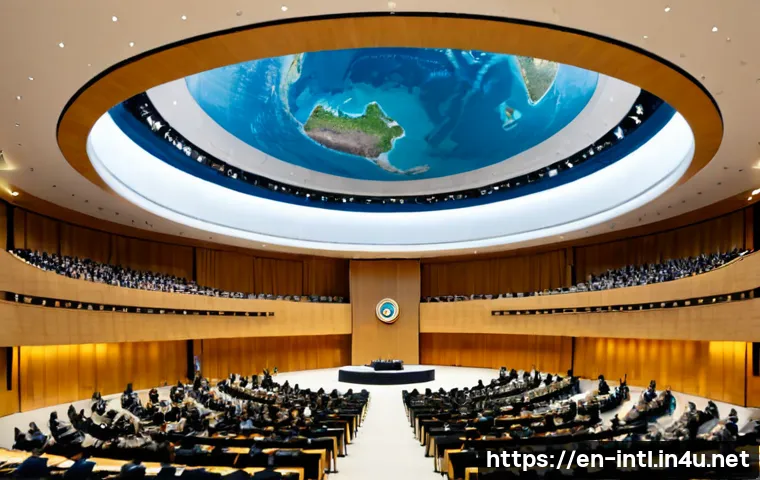
The United Nations is not a world government; it is a system through which 193 member states debate, coordinate, make certain decisions, and run administrative work.
Its real-world power depends heavily on the authority of the relevant body and on support from member states. The General Assembly gives every member state one vote, while the Security Council has a distinct role in peace and security.
The International Court of Justice addresses legal disputes between states that accept its jurisdiction. For students and researchers, the most useful first step is identifying whether a question is political, legal, operational, humanitarian, or security-related.
A clear UN guide, international-relations course, or policy research database can help when the issue requires more than a basic overview.
At a Glance
- The UN is a system of states and institutions, not a single authority above national governments.
- The Security Council and General Assembly do different jobs: one focuses on peace and security, while the other represents all member states.
- Authority, funding, and member-state support must be checked before judging what UN action can achieve.
| UN Body | Main Mandate | Membership or Structure | Decision Method | Typical Question |
|---|---|---|---|---|
| General Assembly | Global representation and debate | All 193 member states | One vote per member state | What is the broader international position? |
| Security Council | Peace and security | 15 members, including five permanent members | Permanent-member veto can block many substantive resolutions | Is there action related to an international security crisis? |
| International Court of Justice | Legal disputes and advisory opinions | A UN principal organ | Jurisdiction depends on state acceptance for disputes | Is this a legal dispute between states? |
| Secretariat | Day-to-day administration | Led by the Secretary-General | Administrative implementation | Who carries out ongoing UN work? |
The Short Answer: The UN Is a System, Not a World Government
What the UN can coordinate, recommend, authorize, and administer
The United Nations was established in 1945 following the adoption of the UN Charter. It brings member states together through bodies with different functions. Some bodies provide a forum for deliberation and political representation. Others address legal questions, support administrative work, or consider peace and security.
This distinction matters. A public statement, a General Assembly resolution, a court opinion, and Security Council action do not automatically carry the same authority or practical effect. When reading a claim about UN action, first ask: Which body acted, under what mandate, and what implementation is required?
Why member states retain most enforcement power
The UN depends on member states for political support, personnel, funding, and practical implementation. It cannot be understood as an independent global government that acts automatically whenever a crisis occurs. Even where a UN body has a clear mandate, real-world results can vary with local conditions, available resources, and cooperation from the states involved.
The fastest way to identify the relevant UN body
Start with the type of question. Security questions point toward the Security Council. Broad global debate and representation point toward the General Assembly. Legal disputes between states may involve the International Court of Justice. Administrative questions point toward the Secretariat. Development, humanitarian, and related operational questions require checking the specific UN program, agency, or partner organization involved.
The Six Principal Organs and What Each One Does
General Assembly: representation and global debate
The General Assembly includes all UN member states, and each state has one vote. It is the clearest place to examine broad international discussion and political positions. However, it is a common mistake to treat every General Assembly resolution as automatically binding law. Its political influence may be important, but the authority of a specific resolution must be examined separately.
Security Council: peace, security, and binding decisions
The Security Council has 15 members. Its five permanent members are China, France, Russia, the United Kingdom, and the United States. A negative vote by any one of these permanent members can block many substantive resolutions. This veto power is central to understanding why a proposal may receive extensive debate yet fail to produce Security Council action.
ECOSOC, the Secretariat, the International Court of Justice, and the Trusteeship Council
The Economic and Social Council, often called ECOSOC, is one of the six principal organs and should be considered when the issue concerns economic or social coordination. The Secretariat handles the UN’s day-to-day administrative work under the leadership of the Secretary-General.
The International Court of Justice settles legal disputes between states that accept its jurisdiction. It can also provide advisory opinions when authorized UN organs request them. The Trusteeship Council suspended regular operations in 1994 after completing its original trusteeship responsibilities. These differences show why the phrase “the UN decided” is often too vague to be useful.
Comparing UN Decision-Making Power, Voting Rules, and Practical Impact
Which decisions are binding, advisory, or politically influential
Use careful language when evaluating UN decisions. A General Assembly action may signal broad political support. An International Court of Justice matter may concern legal interpretation or a dispute between states that accept its jurisdiction. Security Council action relates to international peace and security, but the precise effect of any decision depends on the resolution and the surrounding political context.
How permanent-member veto power changes outcomes
The veto is not a minor procedural detail. Because a negative vote by a permanent Security Council member can block many substantive resolutions, it can shape whether the Council takes a particular course of action. Future votes and vetoes cannot be predicted reliably. Any claim that a proposed resolution will pass, be enforced, or change a conflict should be treated as uncertain until the actual decision and implementation are clear.
A comparison table: authority, membership, cost of inaction, and typical use cases
| Question to Ask | Why It Matters | Where to Look First |
|---|---|---|
| Is this about global political support? | Representation and debate are central | General Assembly records and resolutions |
| Is this about peace or international security? | Veto power and substantive voting matter | Security Council decisions and voting context |
| Is this a dispute between states over law? | Jurisdiction and legal acceptance are essential | International Court of Justice materials |
| Is this about implementation or administration? | Operational capacity may determine results | Secretariat, program, agency, and partner documentation |
How UN Operations Work in Practice
From agenda setting and resolutions to implementation
UN work often moves through several stages: discussion, a decision or resolution, administrative planning, and implementation by the relevant actors. These stages should not be collapsed into one headline. A decision may be politically significant, yet its practical outcome can still depend on funding, personnel, local conditions, and cooperation.
The role of member-state funding, personnel, and political support
Member-state support is a practical limit as well as a political one. Before drawing conclusions about a UN initiative, examine whether the relevant mandate is clear, whether implementation responsibilities are identified, and whether there is evidence of support on the ground. A mandate alone does not establish results.

Peacekeeping, humanitarian coordination, development, and specialized agencies
Different UN-related activities may involve peacekeeping, humanitarian coordination, development work, specialized agencies, programs, and partner organizations. These are not interchangeable labels. For a reliable assessment, identify the exact organization or program, its mandate, its funding context, and any independent evaluation available.
Common Misunderstandings and How to Evaluate UN Claims
“The UN passed a resolution” does not always mean enforcement
This phrase leaves out the most important details: which UN organ acted, what the resolution says, and who must carry it out. A General Assembly resolution should not automatically be presented as enforceable law. Likewise, a Security Council decision should be assessed in light of its terms, political support, and implementation conditions.
Separating UN organs, programs, agencies, and partner organizations
A useful research habit is to name the institution precisely. The General Assembly, Security Council, Secretariat, and International Court of Justice have different roles. A program, agency, or partner organization may operate under a different structure and mandate. Precise naming improves both policy research and classroom analysis.
A checklist for judging authority, funding, mandate, and results
- Which UN body, program, or agency is being discussed?
- What is its stated mandate?
- Was the action political, legal, administrative, or security-related?
- What voting rule, jurisdiction, or authorization process applies?
- Who is expected to provide funding, personnel, or implementation?
- Are there independent evaluations of results in the relevant local context?
Selection Criteria and Comparison Summary for UN Research and Learning Resources
When an introductory guide is enough versus when expert policy analysis is needed
An introductory UN guide is usually enough for learning the six principal organs and their basic roles. More detailed policy analysis is useful when a question involves a specific conflict, a disputed legal claim, a Security Council vote, or the real-world impact of a humanitarian or development program.
How to compare courses, reference databases, and international-relations publications
For a UN-focused course, look for clear coverage of the UN Charter, principal organs, voting rules, and the difference between legal and political authority. For a reference book or policy database, check whether it distinguishes official documents from commentary and whether it identifies the source, date, institution, and context of each claim.
Key takeaways before relying on a claim about UN action
Choose learning resources that explain both formal structure and practical limits. A strong international-relations resource should not imply that a resolution guarantees enforcement or that the UN can act without member-state support. For course details, database coverage, or reference-book scope, review the relevant provider’s official description before choosing.
Selection Criteria and Comparison Summary
Before selecting a UN course, policy research tool, or reference resource, check these points: coverage of the six principal organs, explanation of Security Council veto power, treatment of legal jurisdiction, use of official documents, and clear separation between formal authority and real-world implementation. For a basic framework, prioritize clarity and accurate definitions. For advanced work, prioritize source transparency, policy context, and independent evaluation methods.
In Closing
The UN works through several bodies with different mandates, not through one central global authority. The General Assembly represents all member states, the Security Council addresses peace and security, the International Court of Justice handles qualifying legal disputes, and the Secretariat supports daily administration. The most reliable way to assess a UN claim is to identify the body involved and then examine its authority, decision process, and implementation conditions.
Useful Information to Keep in Mind
One vote per state applies in the General Assembly. The Security Council has 15 members, including five permanent members with veto power over many substantive resolutions. The Trusteeship Council suspended regular operations in 1994. These facts provide a useful starting framework, but they do not predict the outcome of a future crisis or vote.
Important Notes
Do not assume that every UN resolution is automatically enforceable or that a UN program’s impact can be determined from its name alone. Specific outcomes require review of the mandate, funding, local conditions, political support, and independent evaluations. Future Security Council voting and the use of veto power remain uncertain until decisions are made.
Frequently Asked Questions
Q1. What is the difference between the UN General Assembly and the Security Council?
A1. The General Assembly includes all 193 UN member states, with one vote for each state, and serves as a forum for global representation and debate. The Security Council has 15 members and focuses on peace and security. Its five permanent members can block many substantive resolutions with a negative vote.
Q2. Can the United Nations force countries to follow its decisions?
A2. The answer depends on which UN body acted and what authority applies. The UN is not a world government, and implementation commonly depends on member-state support, funding, personnel, and political conditions. A General Assembly resolution should not automatically be treated as enforceable law.
Q3. Which UN body handles international legal disputes between countries?
A3. The International Court of Justice settles legal disputes between states that accept its jurisdiction. It can also provide advisory opinions when requested by authorized UN organs.